When it comes to maintaining a clean and hygienic environment, floor cleaning plays a crucial role in both commercial and residential settings. Traditionally, mopping has been the go-to method for floor cleaning due to its simplicity and affordability. However, with advancements in cleaning technology, floor scrubbers have become a more popular choice in commercial and industrial settings, providing superior results with less effort and time. The question arises: is scrubbing the floor with a floor scrubber truly better than mopping?
At Zhejiang Changxing Shengli Intelligent Machinery Co., Ltd., we specialize in providing high-quality floor cleaning solutions designed for a variety of industries. We understand that efficiency, time-saving, and maintaining high cleaning standards are essential to any business. This article aims to compare the two methods—scrubbing with a floor scrubber versus mopping—to help you determine the best solution for your cleaning needs.
What’s the Difference Between Mopping and Scrubbing with a Floor Scrubber?
Mopping is one of the most common methods of cleaning floors, often used in homes and small commercial spaces. It typically involves a mop, a bucket of water, and a cleaning solution. The process includes wetting the mop, wringing it out, and then using it to scrub the floor manually. Mopping is effective for basic cleaning and can be used on a variety of floor types, but it often falls short when it comes to deep cleaning or dealing with heavy dirt and stains.
In contrast, floor scrubbers are motorized machines designed to scrub and clean large floor areas efficiently. These machines are equipped with rotating brushes or pads that scrub the floor while simultaneously dispensing cleaning solutions and vacuuming the dirty water. The combination of mechanical scrubbing action and wet/dry functionality allows floor scrubbers to remove dirt, grime, and stains more effectively than mopping. Floor scrubbers are typically used in commercial, industrial, or large residential spaces where time and efficiency are of the essence.
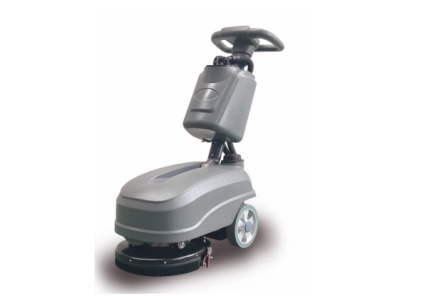
Why Scrubbing with a Floor Scrubber Is Better Than Mopping
1. Time Efficiency
One of the most significant advantages of using a floor scrubber over traditional mopping is the time it saves, especially in large or high-traffic areas. Mopping is a labor-intensive process that can be slow, often requiring multiple passes to achieve a clean surface. This becomes particularly cumbersome in large spaces such as warehouses, shopping malls, or hospitals, where the floor area is vast and cleaning must be done frequently.
In contrast, floor scrubbers can cover large areas much more quickly than mopping, making them ideal for environments where cleaning time must be minimized. Floor scrubbers combine scrubbing and drying into one pass, which greatly enhances efficiency. This simultaneous scrubbing and drying capability ensures that the floor is clean and ready to use almost immediately, whereas mopping often requires long drying times. Depending on the size of the area and the humidity, mopped floors can take hours to dry, leading to longer downtimes and the risk of wet floors creating hazards such as slips and falls.
For businesses like hospitals, retail stores, warehouses, or any facility that experiences high foot traffic, the ability to clean efficiently and quickly is crucial. With a floor scrubber, employees can clean and maintain cleanliness without disrupting daily operations, reducing the need for frequent downtime and ensuring the space remains presentable and hygienic throughout the day. Additionally, floor scrubbers can be used to clean multiple surfaces such as tile, concrete, and vinyl, making them versatile tools for various types of flooring.
2. Better Cleaning Results
While traditional mopping can remove surface dirt, it often leaves streaks, smudges, or a layer of grime behind, particularly in areas with built-up dirt, oil, or grease. The fibers of the mop can spread dirt and contaminants around rather than lifting them off the surface effectively. Mops also often fail to reach into grooves or textured surfaces, meaning dirt remains trapped, leading to a less-than-perfect cleaning outcome.
Floor scrubbers, on the other hand, are specifically designed to offer a much deeper clean. These machines use rotating brushes or pads that scrub the floor surface, helping to lift dirt, grime, and oil more efficiently. By applying a cleaning solution while scrubbing, floor scrubbers loosen dirt from the surface, making it easier to remove and leaving the floor spotless. The result is a more thorough and consistent clean that is not only visually more appealing but also more hygienic.
Many floor scrubbers are equipped with adjustable pressure settings, allowing for customization based on the type of flooring and the amount of dirt. For example, in areas where heavy grease or stains have accumulated, the scrubber can be set to a higher pressure to lift and remove stubborn grime. This feature makes floor scrubbers more effective at dealing with tough stains and oil buildup, which mops alone cannot tackle efficiently. Furthermore, by using clean water and cleaning solutions each time, floor scrubbers prevent the spread of dirt and bacteria, ensuring a cleaner, more sanitary environment.
3. Health and Safety
While aesthetics and cleanliness are important, the health and safety aspects of floor cleaning cannot be overlooked. Mopping, although effective in removing dirt, has a significant drawback: it can spread bacteria and germs. When a mop becomes too dirty, it can transfer bacteria and germs from one area to another, leaving floors still contaminated. The mop head itself can easily become saturated with dirty water and cleaning solutions, which means it might not effectively clean the surface and could lead to a breeding ground for germs. This is a particular concern in environments like healthcare facilities, schools, or food processing plants, where hygiene is of the utmost importance.
4. Long-Term Cost Savings
Although the initial cost of a floor scrubber may seem higher than purchasing a mop and bucket, it’s important to consider the long-term savings. Mopping requires constant replenishing of cleaning supplies such as mop heads, cleaning solutions, and water. Over time, these costs can add up. Additionally, mopping is a labor-intensive process, which can lead to higher labor costs, especially in large facilities where cleaning must be done frequently.
On the other hand, floor scrubbers are durable machines designed for heavy-duty use, requiring less frequent maintenance and fewer consumables. With proper care, a floor scrubber can last for many years, providing significant cost savings over time. The efficiency of floor scrubbers also allows businesses to cut down on cleaning time, which can result in higher productivity and a reduction in operational downtime.
Comparison Table: Mopping vs. Floor Scrubbing
Feature | Mopping | Floor Scrubbing |
Time Efficiency | Slow, especially in large areas | Fast, covers large areas quickly |
Cleaning Quality | May leave streaks, dirt can be spread | Thorough, removes dirt and stains effectively |
Health and Safety | Can spread germs and bacteria | Reduces the spread of germs, removes dirty water |
Labor Intensity | Requires more manual labor and effort | Less physical strain on workers |
Cost | Lower initial cost, but recurring expenses | Higher initial cost, but more cost-effective long-term |
Storage Space | Minimal storage required | Larger machines, but some compact models available |
Conclusion
In conclusion, scrubbing floors with a floor scrubber is undeniably more efficient, cost-effective, and hygienic than traditional mopping methods. While mopping can still be effective for small or less demanding areas, floor scrubbers provide significant advantages in terms of time-saving, cleaning quality, and long-term maintenance. If your business deals with large areas or requires a higher level of cleanliness, investing in a floor scrubber will not only improve your cleaning process but also contribute to a healthier and safer environment.
At Zhejiang Changxing Shengli Intelligent Machinery Co., Ltd., we specialize in high-quality floor scrubbers that are designed to meet the needs of various industries. Whether you are looking for a compact model for smaller spaces or a powerful ride-on scrubber for large areas, we have the solution to help you achieve cleaner, more efficient results. For more information, feel free to contact us.
FAQ
1. Why is a floor scrubber more efficient than mopping?
Floor scrubbers are more efficient than mopping because they clean faster, cover more area, and provide a deeper clean. They use rotating brushes and cleaning solutions to lift dirt more effectively than a traditional mop and bucket.
2. Are floor scrubbers suitable for all types of floors?
Yes, floor scrubbers can be used on a variety of surfaces, including tile, vinyl, concrete, and even carpets. However, it’s important to select the right type of scrubber and pad for the specific floor type to avoid damage.
3. How often should I use a floor scrubber?
The frequency of floor scrubbing depends on the level of traffic and the type of environment. In high-traffic areas or businesses that require high hygiene standards, floor scrubbing may need to be done daily or several times a week.
4. Are floor scrubbers difficult to maintain?
No, most floor scrubbers are relatively easy to maintain. Regular cleaning of the machine, checking the brushes, and ensuring the water tank is properly emptied are typically the main maintenance tasks. It’s also important to follow the manufacturer’s instructions for long-term care and maintenance.

 English
 العربية
 Français
 Русский
 Español
 Português
 Deutsch
 italiano
 日本語
日本語 한국어
한국어 Nederlands
 Tiếng Việt
 ไทย
ไทย Polski
 Türkçe
 ភាសាខ្មែរ
 Bahasa Melayu
 Filipino
 Bahasa Indonesia
 magyar
 Română
 Čeština
 Монгол
 Српски
 हिन्दी
 Slovenčina
 Slovenščina
 Norsk
Norsk Svenska
 українська
 Suomi
Suomi Հայերեն
 Dansk
Dansk اردو
اردو Shqip
Shqip বাংলা
বাংলা Afrikaans
 Oʻzbekcha
 latviešu
 Azərbaycan dili
 Беларуская мова
 Български
 ქართული
 Kinyarwanda
 Кыргызча
 Oluganda
 Македонски
 Malti
Malti Türkmençe
 ئۇيغۇرچە
 Cymraeg


