Introduction
Maintaining clean and polished floors is an essential requirement in any commercial, industrial, or even large residential environment. Traditional cleaning methods such as mopping may be sufficient for small areas, but they often fail to achieve deep cleaning in larger, high-traffic spaces. This is where the floor scrubber comes into play. A floor scrubber is a specialized machine designed to scrub, wash, and dry hard surface floors quickly and efficiently. It not only enhances cleanliness but also improves safety by reducing slip hazards caused by excess water or debris.
The global demand for floor scrubbers has risen significantly in recent years, driven by stricter hygiene standards and the growing need for time-saving cleaning equipment. Whether in supermarkets, warehouses, hospitals, or schools, these machines are proving indispensable. To make the right choice, it is important to understand the different types of floor scrubbers, their unique functions, and which environments they are best suited for. This guide will examine the major categories of floor scrubbers, provide practical insights, and help decision-makers evaluate which machine meets their needs.
Walk-Behind Floor Scrubbers
One of the most common types of floor scrubbers is the walk-behind floor scrubber. As the name suggests, the operator walks behind the machine and guides it during cleaning. These scrubbers are particularly well-suited for medium-sized areas where maneuverability is important.
Walk-behind scrubbers come in a range of sizes, from compact models designed for tight spaces such as restrooms and corridors, to larger models capable of cleaning wide hallways and retail floors. Their brushes or pads rotate at high speeds, scrubbing away dirt, grime, and stains, while a squeegee system collects dirty water into a recovery tank. The simultaneous scrubbing and drying action ensures that floors are left clean and safe for immediate use.
In terms of operation, walk-behind scrubbers can be either corded (requiring a power source) or battery-operated, with the latter offering greater flexibility in environments where access to electrical outlets is limited. They are often chosen for their ease of use, affordability, and ability to deliver consistent results without requiring extensive training.
A major advantage of walk-behind models is their compact footprint, which makes them highly maneuverable in congested environments. However, they may not be as efficient as larger ride-on models when it comes to covering very large areas. Thus, businesses must evaluate floor size and cleaning frequency when deciding whether a walk-behind scrubber is the best investment.
Ride-On Floor Scrubbers
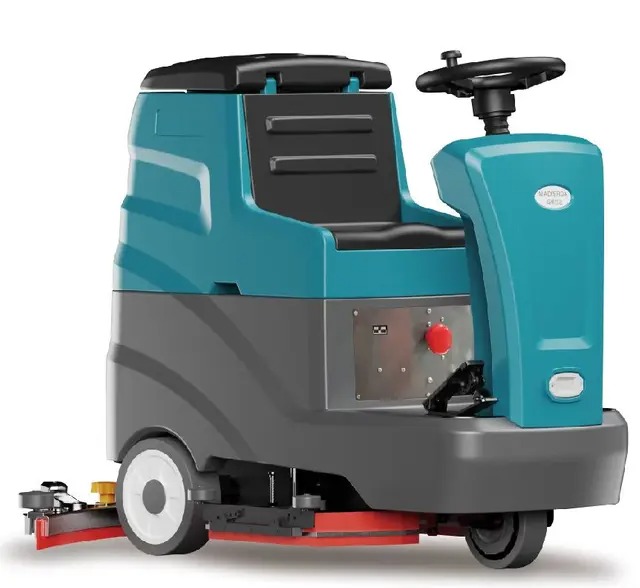
For facilities with large floor surfaces, such as shopping malls, airports, warehouses, or factories, ride-on floor scrubbers provide an ideal solution. These machines allow operators to sit on the unit and drive it like a small vehicle. The ride-on design significantly reduces operator fatigue and increases cleaning speed, enabling larger spaces to be cleaned in less time.
Ride-on scrubbers are engineered for heavy-duty cleaning tasks and can cover thousands of square feet per hour. They typically feature wider cleaning paths, larger solution and recovery tanks, and powerful brush systems. This allows them to handle stubborn dirt, grease, or high-traffic grime with ease. Additionally, the ergonomic design enhances operator comfort, making them suitable for extended use in industrial or commercial settings.
Another benefit of ride-on scrubbers is their productivity. By combining fast cleaning with minimal downtime for refilling or emptying tanks, they offer cost savings in labor and maintenance. Although they require a higher initial investment compared to walk-behind models, their long-term efficiency and durability make them a valuable asset for organizations that prioritize cleanliness across expansive areas.
However, potential buyers must consider maneuverability. Ride-on scrubbers may not be ideal for small or cluttered spaces where tight turns are necessary. Their larger size also requires sufficient storage space. Nonetheless, in environments where large-scale cleaning is a daily necessity, a ride-on scrubber can be the most effective option.
Robotic and Autonomous Floor Scrubbers
The advancement of automation has brought about the emergence of robotic floor scrubbers, which are revolutionizing the cleaning industry. These scrubbers operate autonomously, using sensors, cameras, and artificial intelligence to navigate spaces without human intervention. They can be programmed to follow specific cleaning routes, avoid obstacles, and return to charging stations when their batteries are low.
Robotic floor scrubbers are particularly beneficial in facilities that operate around the clock, such as hospitals, airports, or manufacturing plants. They allow cleaning tasks to be carried out during off-peak hours, ensuring that floors remain spotless without interrupting daily activities. By reducing the need for manual labor, these machines also help organizations save on staffing costs while maintaining consistent cleaning standards.
Some advanced models even provide data analytics, recording cleaning patterns, duration, and performance metrics. This information can be used by facility managers to optimize cleaning schedules and identify areas requiring extra attention.
Although robotic scrubbers represent a higher upfront cost, they are quickly becoming a preferred choice for businesses that value innovation, efficiency, and sustainability. With the growing emphasis on smart technology, the adoption of autonomous floor scrubbers is expected to expand significantly in the years to come.
Cylindrical vs. Disk Floor Scrubbers
When selecting a floor scrubber, it is also important to consider the brush type, as this directly influences cleaning performance. The two most common configurations are cylindrical and disk scrubbers.
Cylindrical Scrubbers:
These scrubbers use counter-rotating cylindrical brushes that both scrub and sweep debris simultaneously. They are ideal for uneven surfaces, grout lines, or textured floors where dirt tends to accumulate. The integrated sweeping function reduces the need for pre-sweeping, saving time and effort.
Disk Scrubbers:
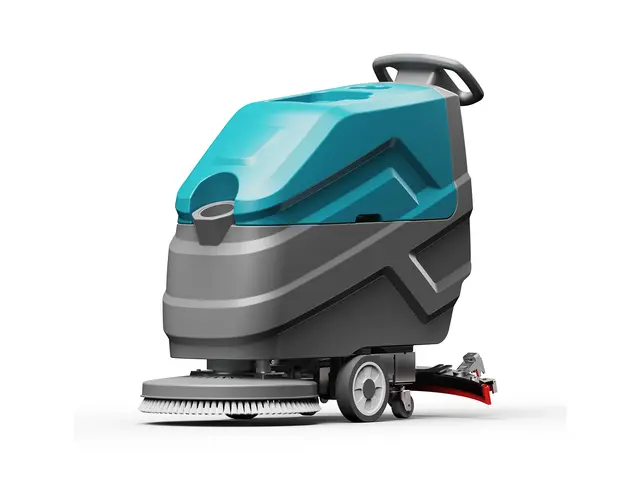
These scrubbers employ flat, circular pads or brushes that provide direct contact with the floor surface. They are highly effective for smooth, flat flooring such as tiles, vinyl, or polished concrete. Disk scrubbers are known for their versatility, as they can be fitted with different pads designed for scrubbing, stripping, or polishing.
The choice between cylindrical and disk scrubbers depends largely on the type of flooring and the nature of debris commonly encountered. Cylindrical models excel in environments where dirt particles are frequent, such as warehouses or workshops, while disk scrubbers are better suited for retail spaces, hospitals, and schools that demand spotless finishes.
Comparison Table: Types of Floor Scrubbers
| Type | Best Suited For | Advantages | Limitations |
| Walk-Behind Scrubber | Medium-sized areas, corridors, offices | Affordable, maneuverable, easy to use | Less efficient for very large spaces |
| Ride-On Scrubber | Large commercial/industrial spaces | High productivity, operator comfort | Higher cost, requires storage space |
| Robotic Scrubber | 24/7 facilities, tech-driven operations | Autonomous, labor-saving, data analytics | High upfront investment |
| Cylindrical Scrubber | Textured/uneven floors, debris-prone areas | Sweeps and scrubs simultaneously | Less effective on smooth flooring |
| Disk Scrubber | Smooth floors, retail, hospitals | Versatile pads, polished finish | Requires pre-sweeping in some cases |
Frequently Asked Questions (FAQ)
Q1: What size floor scrubber do I need?
The size of the scrubber depends on the area you need to clean. For small to medium spaces, a walk-behind model is sufficient, while larger facilities benefit from ride-on or robotic scrubbers.
Q2: Are floor scrubbers difficult to maintain?
Modern floor scrubbers are designed for ease of maintenance. Regular cleaning of tanks, brushes, and squeegees will extend the machine’s life and ensure optimal performance.
Q3: Can floor scrubbers be used on all surfaces?
Most scrubbers are designed for hard floor surfaces such as tile, vinyl, marble, or concrete. However, choosing the right brush type (cylindrical or disk) is essential to match the flooring material.
Q4: How long do floor scrubber batteries last?
Battery life varies by model but typically ranges from two to four hours of continuous operation. High-capacity batteries can provide extended run times, which is crucial in large facilities.
Q5: What is the main advantage of robotic floor scrubbers?
The key advantage lies in automation. Robotic scrubbers reduce the need for manual labor, operate consistently, and allow cleaning during off-hours, maximizing productivity without human supervision.
Conclusion
Investing in the right floor scrubber can transform the way facilities maintain cleanliness and hygiene. From walk-behind models suited for everyday tasks to ride-on scrubbers for expansive areas, and from robotic machines powered by AI to specialized cylindrical or disk brush systems, the options are diverse and adaptable.
When making a decision, factors such as floor size, surface type, budget, and cleaning frequency should all be carefully evaluated. A well-chosen floor scrubber not only enhances the appearance of floors but also improves workplace safety, reduces cleaning time, and contributes to long-term cost savings. In today’s fast-paced world, where cleanliness standards are higher than ever, floor scrubbers are not just tools—they are essential partners in maintaining a hygienic and professional environment.

 English
 العربية
 Français
 Русский
 Español
 Português
 Deutsch
 italiano
 日本語
日本語 한국어
한국어 Nederlands
 Tiếng Việt
 ไทย
ไทย Polski
 Türkçe
 ភាសាខ្មែរ
 Bahasa Melayu
 Filipino
 Bahasa Indonesia
 magyar
 Română
 Čeština
 Монгол
 Српски
 हिन्दी
 Slovenčina
 Slovenščina
 Norsk
Norsk Svenska
 українська
 Suomi
Suomi Հայերեն
 Dansk
Dansk اردو
اردو Shqip
Shqip বাংলা
বাংলা Afrikaans
 Oʻzbekcha
 latviešu
 Azərbaycan dili
 Беларуская мова
 Български
 ქართული
 Kinyarwanda
 Кыргызча
 Oluganda
 Македонски
 Malti
Malti Türkmençe
 ئۇيغۇرچە
 Cymraeg


