When it comes to maintaining cleanliness in commercial, industrial, or even residential spaces, the methods used can make a substantial difference. Traditional tools such as mops and buckets have long served their purpose, but in today’s fast-paced environment, efficiency and hygiene require more advanced solutions. This is where the floor scrubber enters the picture. Many people wonder: Is a floor scrubber truly worth the investment? To answer this, we need to explore its numerous benefits in detail. From cost-effectiveness to operational ease, the floor scrubber offers advantages that go far beyond what many expect.
What Makes a Floor Scrubber More Effective Than Traditional Cleaning Methods?
A common question arises when considering new cleaning equipment: Why not just stick to mopping and sweeping? The answer lies in performance and hygiene. A floor scrubber is specifically designed to combine scrubbing, washing, and drying functions into one seamless process. Unlike manual cleaning, which often leaves behind streaks, dirty water, or unevenly cleaned surfaces, a scrubber applies consistent pressure and water distribution to achieve uniform results.
Additionally, floor scrubbers use powerful brushes or pads that agitate dirt and grime embedded in floor surfaces. This mechanical action is far more effective than manual scrubbing, which relies heavily on human effort and can result in fatigue. The scrubber also collects dirty water immediately, ensuring that the floor is not only clean but also dry and safe to walk on. In environments such as hospitals, warehouses, or schools, this quick drying time minimizes the risk of slips and accidents.
From an efficiency standpoint, floor scrubbers drastically reduce cleaning time. A large area that might take hours with manual tools can be cleaned in a fraction of the time with a scrubber. This allows staff to focus on other important tasks, boosting overall productivity. Over time, the difference in efficiency translates into cost savings, making the floor scrubber a highly practical solution for businesses and institutions that prioritize both cleanliness and time management.
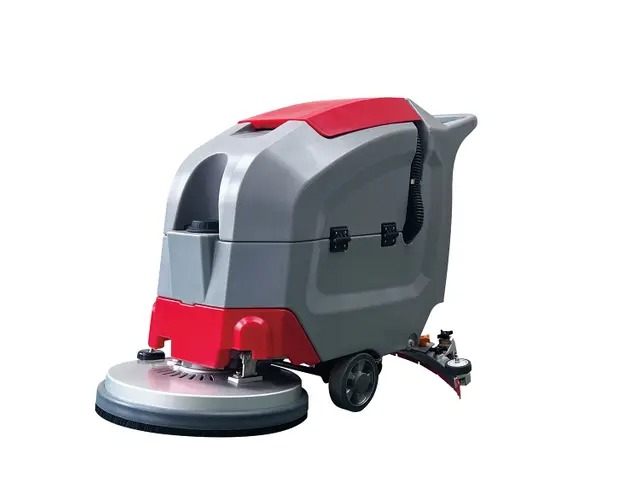
How Do Floor Scrubbers Enhance Hygiene and Safety Standards?
Another important question is: Can a floor scrubber really improve hygiene beyond what regular cleaning achieves? The answer is a definite yes. Hygiene has become a central concern in recent years, especially in industries such as healthcare, food production, and education. Floor scrubbers are designed not just to clean surfaces, but to sanitize them more effectively.
When using a mop, dirty water often gets spread across the floor multiple times, which can leave behind bacteria and contaminants. A floor scrubber, however, separates clean water from dirty water. Fresh water is dispensed onto the surface, scrubbed in with high precision, and then suctioned back into a separate recovery tank. This process ensures that contaminants are removed completely rather than redistributed.
Furthermore, the drying function prevents the growth of mold and mildew, which can thrive in damp environments. For spaces where hygiene regulations are strict, such as hospitals or laboratories, this function becomes indispensable. In addition to hygiene, safety is also enhanced. Slippery floors are a leading cause of workplace accidents, and by leaving surfaces dry almost instantly, floor scrubbers significantly reduce this risk.
The improved hygiene and safety provided by floor scrubbers not only protect employees and visitors but also reflect positively on an organization’s reputation. Clean and safe spaces are directly linked to higher satisfaction, whether from patients, customers, or staff.
Are Floor Scrubbers Cost-Effective in the Long Run?
At first glance, some may wonder: Isn’t a floor scrubber too expensive compared to basic cleaning tools? While the initial investment might appear higher, the long-term savings are undeniable. Floor scrubbers provide cost-effectiveness in several important ways.
First, they reduce labor costs. Because these machines clean faster and more efficiently, fewer staff hours are needed to achieve the same or even better results. This can significantly lower overall payroll expenses, especially in large facilities that require daily maintenance.
Second, floor scrubbers extend the lifespan of flooring materials. Dirt and debris, if not removed properly, can cause abrasion and wear over time. The thorough scrubbing action of these machines prevents long-term damage, helping floors maintain their appearance and structural integrity. This reduces the need for costly floor replacements or repairs.
Third, they minimize the use of cleaning solutions and water. Floor scrubbers are engineered to dispense controlled amounts of detergent and water, ensuring there is no wastage. Compared to the repeated refilling of mop buckets, this efficient resource use leads to lower utility and supply costs.
The table below illustrates a simple comparison of traditional cleaning vs. floor scrubber usage:
| Factor | Traditional Cleaning | Floor Scrubber Cleaning |
| Time Required | High (hours) | Low (minutes) |
| Water Consumption | High | Low |
| Labor Intensity | Very High | Minimal |
| Hygiene Level | Moderate | Very High |
| Floor Drying Speed | Slow | Almost Instant |
As shown, the return on investment with a floor scrubber quickly outweighs the initial expense, making it a wise financial decision for both small and large facilities.
Do Floor Scrubbers Adapt to Different Environments and Floor Types?
One of the most frequently asked questions is: Can a floor scrubber handle different kinds of floors? The answer is yes. Modern floor scrubbers are highly versatile and designed to adapt to various environments.
They can be used on surfaces such as tile, vinyl, concrete, stone, and even sealed wood floors. Adjustable settings allow operators to control brush pressure, water flow, and cleaning modes according to the specific surface. This versatility means a single machine can handle multiple areas within a facility, from smooth office flooring to rough industrial surfaces.
In terms of environments, floor scrubbers are suitable for a wide range of settings. In commercial offices, they ensure professional presentation by keeping floors spotless. In industrial spaces, they withstand heavy dirt, grease, and debris. In schools or hospitals, their hygiene benefits stand out as they help maintain strict health standards. Even in retail stores, where customer impressions matter, floor scrubbers provide a clean and safe shopping environment.
Furthermore, their designs range from compact models ideal for narrow corridors to larger ride-on versions capable of covering wide warehouse floors. This adaptability ensures that organizations can select a scrubber that perfectly suits their space requirements. By eliminating the need for multiple cleaning tools, floor scrubbers provide both flexibility and cost efficiency.
How User-Friendly and Efficient Are Floor Scrubbers to Operate?
Another vital concern is: Are floor scrubbers complicated to use? Surprisingly, they are designed with user-friendliness in mind. Most models feature intuitive controls that require minimal training, enabling staff to operate them confidently and efficiently.
The machines are ergonomically designed to reduce strain, featuring comfortable handles, adjustable settings, and smooth maneuverability. For larger models, ride-on scrubbers even provide seated operation, further enhancing ease of use. The maintenance of these machines is also straightforward, with detachable tanks that can be easily emptied and cleaned.
Efficiency is another highlight. The integration of scrubbing, washing, and drying in one pass eliminates repetitive tasks. Operators do not need to go over the same area multiple times, which significantly boosts productivity. Additionally, many floor scrubbers are engineered with noise reduction technology, making them suitable for use in noise-sensitive environments such as schools, hospitals, or hotels.
By reducing manual effort, simplifying operation, and streamlining workflow, floor scrubbers not only enhance productivity but also improve employee satisfaction. Workers are less likely to experience fatigue or injury, leading to a healthier and more motivated workforce.
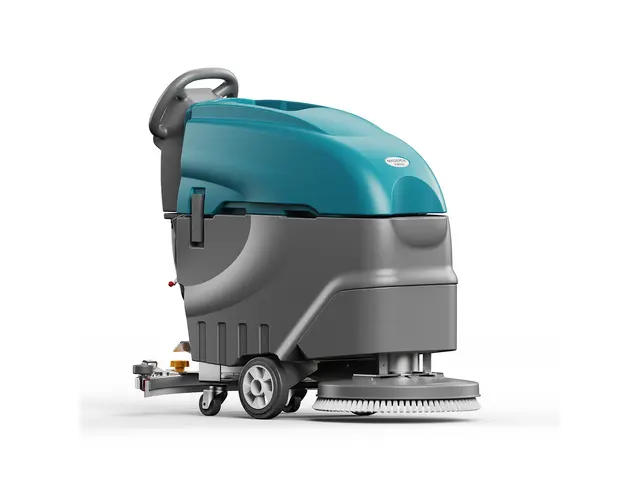
Frequently Asked Questions (FAQ) About Floor Scrubbers
Q1: How often should a floor scrubber be used?
A: Usage frequency depends on the environment. In high-traffic areas such as shopping centers or hospitals, daily use is recommended. In lower-traffic spaces, weekly cleaning may be sufficient.
Q2: Are floor scrubbers environmentally friendly?
A: Yes. By using less water and detergent compared to traditional cleaning methods, they contribute to sustainability and reduce waste.
Q3: What type of maintenance does a floor scrubber require?
A: Regular tasks include emptying the recovery tank, rinsing filters, and checking brushes or pads for wear. With consistent upkeep, these machines have a long lifespan.
Q4: Can one person operate a floor scrubber?
A: Absolutely. Floor scrubbers are designed for solo operation, making them efficient and practical for organizations of all sizes.
Conclusion
Considering all the advantages—efficiency, hygiene, cost savings, adaptability, and user-friendliness—the floor scrubber emerges as a superior solution to traditional cleaning methods. It addresses modern demands for cleanliness and safety while delivering long-term economic benefits. Whether for commercial, industrial, or institutional use, this equipment represents an investment that pays off in performance, savings, and reputation.
For organizations aiming to maintain the highest standards of cleanliness while optimizing costs and labor, the floor scrubber is not just an option—it is a necessity.

 English
 العربية
 Français
 Русский
 Español
 Português
 Deutsch
 italiano
 日本語
日本語 한국어
한국어 Nederlands
 Tiếng Việt
 ไทย
ไทย Polski
 Türkçe
 ភាសាខ្មែរ
 Bahasa Melayu
 Filipino
 Bahasa Indonesia
 magyar
 Română
 Čeština
 Монгол
 Српски
 हिन्दी
 Slovenčina
 Slovenščina
 Norsk
Norsk Svenska
 українська
 Suomi
Suomi Հայերեն
 Dansk
Dansk اردو
اردو Shqip
Shqip বাংলা
বাংলা Afrikaans
 Oʻzbekcha
 latviešu
 Azərbaycan dili
 Беларуская мова
 Български
 ქართული
 Kinyarwanda
 Кыргызча
 Oluganda
 Македонски
 Malti
Malti Türkmençe
 ئۇيغۇرچە
 Cymraeg


